Sebring 12h iRacing 2026 — We Got Hit Hard and Hit Back
Sebring International Raceway
Sebring 12 Hour — iRacing Special Event
- Duration
- 12H
- Position
- P19
- Drivers
- Andy, Matti
- Car
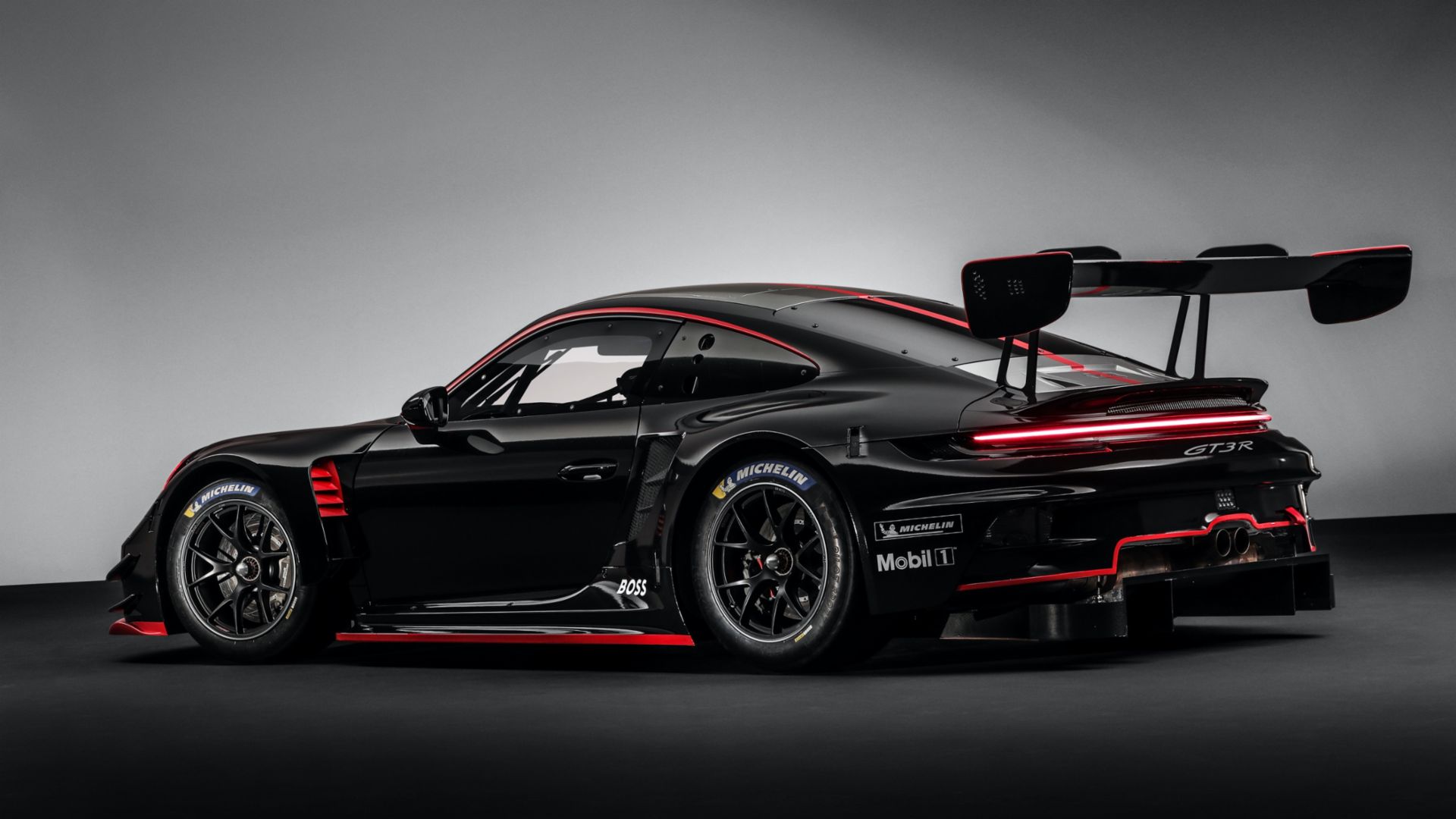
- Porsche 911 GT3 R (992)
Our first special event with the website live. Weeks of announcements, the stress of having to perform on a public-facing race, and barely any practice time. Twelve hours from 11 PM to 11 AM — a full night race through to a sunrise we’d have to drive through with the sun in our faces.
Race Setup
The Sebring 12 Hour is an iRacing special event with a reputation that’s earned. The real-world circuit is famous for being one of the bumpiest tracks on the calendar, and iRacing’s laser-scanned version is faithful to that — every concrete patch, every expansion joint, every transition where the asphalt gives up on being flat.
We entered with two drivers — Andy and Matti — across twelve hours that started at 11 PM local time. That meant the first half of the race was in full night conditions, with the back half running through dawn and into the morning sun. A different problem at each end of the stint.
This was also our first special event since launching the team website. We’d told people we were going to be racing. Now we had to race.
Qualifying & Start
Matti qualified P18 with a 2:05 on cool track temperatures. Not a headline number, but Sebring rewards consistency over peak pace and we’d planned the race around that idea — qualify in the middle of the pack, then let the field sort itself out across the first three hours.
The start was chaotic but survivable. Twelve-hour starts always are — fifty drivers all making the same mistake at once, all desperate to gain three positions in the first lap that they won’t keep through the night. We held position. Watched. Let the wreckage happen in front of us and ran our laps.
The opening hour ran cleanly. P17 was within reach without forcing anything. The car felt good. The bumps weren’t punishing us yet.
The Stints
Then mid-race, the race broke.
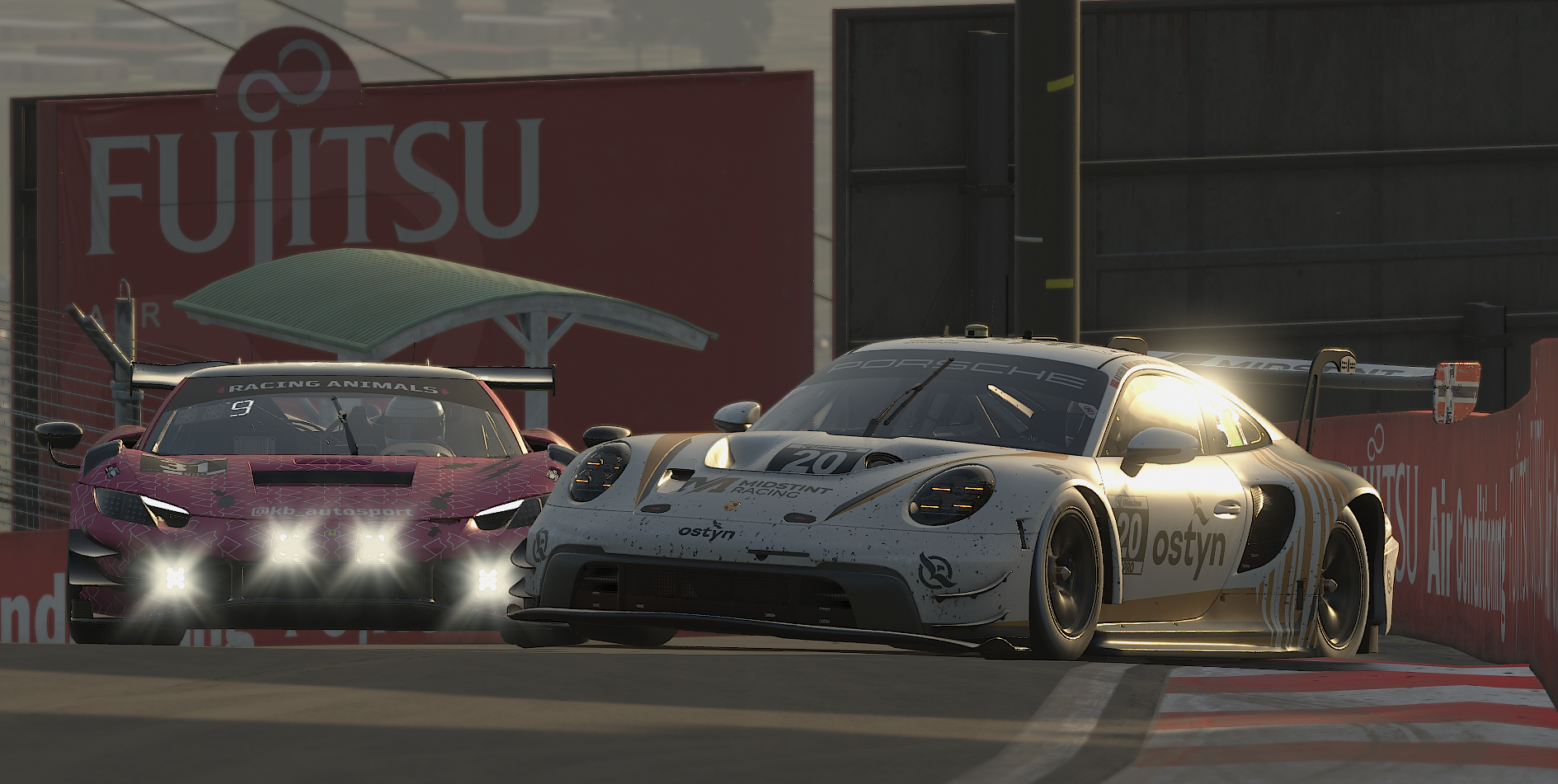
Fighting for P17, Matti got bumped at turn one and collected by another car going for the same gap. While both cars were still sliding sideways across the apex, a hypercar flew through the corner at full speed and hit the passenger side. Three minutes for the tow. Seven minutes in the garage for repairs. Twelve minutes total. Six laps lost.
We dropped to P29 — dead last of the cars still running. Whatever the race was going to be, it wasn’t going to be that anymore.
Andy took over for the brutal 3:30–6:30 AM stint. The hours when even the spotter sounds tired. He quietly drove the car from the back of the field to P19–P21 while Matti slept in another room. No drama. No big moves. Just clean laps in the dark, one after another, the kind of stint you don’t make a YouTube highlight from but that decides the race.
Matti’s morning stint was scrappier. Real-life sunrise blinded him through the screen, forcing an unplanned pit stop just to close the blinds in the room before he could see the apex of turn one again. A few spins. Small contacts. Competitive pace when the rhythm was there. Lost again when it wasn’t.
Andy started his final stint on 26 hours without sleep. Survival mode — early laps that were five tenths slower than his stint average, no risks, no aggression. Then, with one hour to go, he was told over the radio to push. And something opened up. He posted the fastest lap of the race in the closing twenty minutes.
Finished P19. Six seconds behind P18.
What We Learned
Six seconds. After twelve hours, six laps lost, and an audio failure that ate part of one stint, we ended up six seconds away from a position we could have taken without ever pushing. That’s endurance racing.
The lesson isn’t about pace. We had pace when it mattered. The lesson is about everything that isn’t pace: the sun rising through a window we hadn’t blacked out. The audio cutting at the wrong moment. The schedule that had us awake for 26 hours by the end. Each of those cost more than the gap between P19 and P18.
Next special event: blackout the room before the green flag. Backup headset on the desk. Fewer commitments in the week leading up to it. Sleep is not a luxury in twelve-hour racing — it’s part of the setup.
Setup Notes
We ran the Porsche 911 GT3 R (992) on a baseline endurance setup rather than chasing a fast lap. Sebring is bumpy enough that softening the springs front and rear is worth a few tenths in feel even if you lose a fraction on a clean lap — and there are no clean laps at Sebring.
FFB sensitivity dialled back for the long night. Brake bias slightly forward in the cool 3 AM temperatures, walked rearward as the track warmed up. Fuel strategy was straightforward: stint length tied to driver fatigue more than fuel range. For a twelve-hour, the driver is the limiting factor, not the car.
Photos

Want to see more races?